



What drives a career forward in a truly sustainable way? It is never just hard work or ambition. It is a living combination of inner motivation, psychological safety, courage, clarity, and the often‑forgotten balance between work and life that keeps us healthy enough to grow over the long run.
This conversation with Marci Macedo is a beautiful exploration of what it truly means to grow.
In this episode you will learn:
- Why a sustainable career needs resilience, clarity, and reinvention beyond titles
- How motivation plus psychological safety create a growth zone where you can truly thrive
- What makes a high‑performing team: autonomy, clear goals, accountability, and mentoring leadership
- How lack of psychological safety quietly destroys motivation and innovation at work
- Why aligning your life purpose and professional purpose changes how you show up
- How Marci’s path and health crisis reshaped her view of success and identity
- What real life–work balance means and why over‑identifying with work is risky
- How growth zone principles also apply at home, in families as our “first business.”
- Why empowering women needs both strong tools and a supportive community
- How to take the first step in (re)building your career by starting small and being kind to yourself
When you listen to this conversation, please think about any leader, HR, DEI expert that can benefit from it and share with this person later on. I really care to be reaching the right people with my content, so thank you very much for this in advance.
I wish you fun and discovery!
Leave your comments below or on A Step Ahead LinkedIn profile. If you want to stay in touch, sign up for the newsletter and  follow A Step Ahead Podcast in your favourite streaming service
  .
.
If you need to educate leaders in how to create psychological safety in your remote teams, or if you would like to increase inclusive leadership practices, or resilience of your employees – please contact us at ETTA www.ettagoglobal.com.
Additional materials:
- Marci’s LinkedIn
- Podcast: Psychological Safety in a Virtual Team – 4 Steps to Mastery – ASA 003 (with Katarzyna Romanowicz)
- Podcast: Setting Goals for Purposeful Life – ASA 021 (with Bruno Morgante)
- Podcast (PL): Zaufanie – kapitał lidera – OKDP 112 (with Remigiusz Wojciechowski)
From Reception Desk to Global Management
Marci Macedo’s professional story starts in a very operational role, close to the reception desk and far away from strategy tables and global meetings. Within seven years, she stepped into a global management position in one of the major players in a prestigious industry, moving carefully but decisively up the ladder. What made this possible was not just talent or luck, but a mindset of resilience, clarity about what she wanted, and a deep determination to reinvent herself after each personal and professional challenge.
She knew where she was, what she was capable of, and where she wanted to be in the future. That awareness helped her stay motivated on a daily basis, even when the next step was not obvious or when language barriers and uncertainty made progress slower than she expected. To her, growth meant being accountable to herself first, true to her values, and courageous enough to build her own path instead of waiting for someone to design it for her.
Stepping Into the Growth Zone
Today, Marci connects her journey with the concept of the Growth Zone – an approach that combines motivation and psychological safety and is supported by tools such as Global DiSC. For her, stepping into the growth zone means embracing challenges with clarity, courage, and a sense of psychological safety, instead of performing on pure pressure or fear. It is about creating an environment where people are aligned with their goals, can take bold actions, and feel supported when they succeed and when they make mistakes.
This mindset allows people to grow continuously and hold themselves accountable in a way that is meaningful, not self‑punishing. As she and Monica explore, the growth zone is not just about individual performance but about what we can achieve together as teams, organizations, and communities. It brings together key motivational drivers like autonomy, mastery, purpose, accountability, courage, and persistence with the psychological conditions that make high performance sustainable.
Motivation, Safety, and a High‑Performing Team
In her last company, Marci experienced what it means to be part of a truly high‑performing, psychologically safe team. She describes a group of highly competitive peers who still saw themselves as a unit, motivated themselves collectively, and supported each other instead of stepping on each other’s values to get ahead. They had differences, of course, but there was enough trust and openness to say: “I don’t agree with that. Can you tell me where you’re coming from? I’m not understanding why you’re going this way.”
That openness was not accidental. It was actively supported by a manager who behaved more like a mentor and coach than a controller. He gave them autonomy in their projects, the freedom to take decisions, and invited them to come back to him only for advice, feedback, or topics that were truly above their pay grade. He brought his strong network and experience to guide them, but he did not micromanage; instead, he trusted them to take ownership and grow.
Autonomy, however, is not a magic word. Marci has seen both sides of it: people blooming when they are trusted, and people becoming “nasty” when autonomy is given without clarity or mutual accountability. For autonomy to be sustainable, leaders must offer clear goals, expectations, and boundaries: where are we going, by when, and what do we expect from each person and from the team as a whole. When clarity, courage, psychological safety, and accountability come together, autonomy becomes a powerful fuel for long‑term performance instead of a source of chaos.
Diversity of Thinking and Inclusivity
Another important ingredient in Marci’s story is the diversity of thinking inside the team. She emphasizes how essential it is, especially for managers, to stay open to different ideas, perspectives, and ways of doing things instead of falling into micromanagement. When people bring diverse experiences and viewpoints, they bring more information and more options to the table, and innovation becomes possible.
For her, inclusivity is the door that naturally invites diversity. If you include everyone in your team in a project or a decision, if you are genuinely open to hearing what they want to say, their ideas will come and diversity will appear organically. This is not about ticking boxes; it is about creating a culture where everyone knows their voice has a place, even if not every idea is adopted. That experience of being heard is directly connected to motivation, psychological safety, and the courage to contribute.
When Psychological Safety Is Missing
Marci has also experienced the opposite: a lack of psychological safety that slowly kills motivation. In a previous job, her manager did not share the full picture of the tasks or the goals they needed to achieve. Instead of understanding the “why” behind the work, she had to wait to be told what to do, step by step, which left no room for initiative or ownership.
In such an environment, people don’t feel safe to share ideas, admit mistakes, or challenge assumptions without fear of punishment or ridicule. They stop speaking up, hold back their best thinking, and reduce themselves to following procedures. Even if they care deeply, the lack of autonomy and the absence of purpose gradually drain their energy, and they start to feel like their only role is to execute someone else’s script.
For Marci, psychological safety is not a “soft” extra; it is the foundation that allows autonomy, mastery, and purpose to grow. When people feel heard and trusted, they will go beyond what is expected, engage deeply, and take responsibility for their impact. When they are silenced, the opposite happens, no matter how talented they are.
Purpose as the Engine of Sustainable Drive
Purpose appears again and again in Marci’s reflections as the strongest driver of sustainable motivation. When people connect their work with meaning, they naturally go beyond what is written in the job description. Purpose becomes the engine that moves them through challenges, uncertainty, and change.
She sees purpose on two levels. First, there is a personal life purpose: what do I want for myself as a human being, beyond any title or company. Second, there is a professional purpose that needs to align with the values and mission of the organization they work for. When these two are connected, work becomes more than a paycheck; it becomes a space where people can live their values and contribute to something they believe in.
Monica, coming from the world of training, coaching, and consulting, resonates strongly with this need for alignment. She describes herself as one of the lucky ones who can actively shape the connection between her personal and professional purpose and appreciates how vital this is in her own career.
A Pivot Towards Empowering Women
After all these experiences, Marci finds herself at a point of pivot: she wants to use what she has lived and learned to support others, especially women, in their careers. She has gone through significant personal challenges, including major health issues, which have deeply influenced her professional life and forced her to rethink what “success” means. Yet she did not give up on herself, her dreams, or her purpose.
Now she feels called to build a program that helps women thrive – not only in terms of titles and salaries, but in terms of self‑understanding, purpose, and leadership. It is still an early idea, but the direction is clear: she wants to empower women to feel that they can do it, even when the world makes it harder for them. She dreams of a community of strong women who share experiences, support each other, and grow together, using their inner power and gut feelings as a compass.
In this program, she sees Global DiSC and the Growth Zone approach as structural supports. These tools can help women understand where they are now, what their needs and values are, and how they behave and collaborate in different environments. They offer a framework for coaching and development that can make abstract ideas like motivation and psychological safety more tangible and actionable.
Sustainability: Beyond Titles and Targets
When the word “sustainable career” appears in the conversation, it initially feels abstract. But Marci quickly grounds it in something very concrete: work‑life balance, or even better, life‑work balance. For her, sustainability means being able to pursue professional goals without sacrificing health, identity, and the relationships that make life worth living.
She speaks openly about seeing herself as a workaholic, someone who was extremely focused on achieving the title and the salary she wanted. When a major health problem forced her to stop working, she suddenly realized she did not know who she was without her job. Her identity felt completely tied to her role at work, and resting at home made her feel guilty, even though she was recovering from a serious condition.
This experience pushed her to rediscover herself beyond her professional achievements. She began asking: who am I without this job, without this role, without constant performance. That reflection led her to a simple but powerful conclusion: the only sustainable way to build a career is to also build a life, to consciously balance these two worlds instead of letting one erase the other.
When you are happy and loved at home, you are better able to perform and innovate at work. When you are achieving meaningful goals at work, you are more likely to come home with energy and satisfaction to share. One world fuels the other, and ignoring either side creates a fragile structure that can collapse when a crisis comes.
Bringing Growth Zone Thinking Home
An unexpected but beautiful turn in the conversation is the idea that the same growth zone principles we use in business can and maybe should be used in family life. If we talk about purpose, autonomy, accountability, psychological safety, and courage at work, why not ask ourselves similar questions at home.
In a family, we also have roles, expectations, and a shared “cosmos” with its own goals and values. We can ask: what is my purpose in this family, what am I accountable for, where is my autonomy, and what do I want to master in this personal sphere. We can build psychological safety by allowing uncomfortable topics to be discussed, practicing vulnerability, and creating a culture where everyone feels they can be themselves.
There is competition at home too – children competing for attention, siblings arguing over the last piece of cake – but the underlying measure is not quarterly results; it is the sustainability of love, connection, and mutual growth. Marci beautifully describes family as our “first business,” the base that gives us the strength to go out into the world and perform. If that foundation is strong, we are more resilient in the face of disagreement, competition, and uncertainty at work.
Leadership, in this perspective, is not limited to offices and teams. It is a way of being that appears when we guide a project, lead a team, raise children, or take care of ourselves. The same core elements – clarity, accountability, courage, psychological safety, autonomy, mastery, and purpose – can guide us in both environments.
Restarting or Rebuilding a Career: The First Step
Towards the end, the conversation comes back to a very practical question: if you want to build or rebuild your career with all this in mind – growth zone, motivation, psychological safety, sustainability – what is the first step. Marci’s answer is simple and deeply human: start small.
She talks about speaking to herself here: she doesn’t need to rush, she can be kind to herself, and she can start from the beginning by honestly assessing how she feels and what she wants to achieve. The first step is awareness: knowing where you are, where you want to be, and when you want to get there. That awareness includes clarifying your purpose in life and your purpose professionally, so that your actions are not just reactions to external expectations.
From there, it becomes possible to move intentionally towards a career that reflects your values, supports your life, and allows others to grow with you rather than at your expense. Success, as Marci defines it now, is not about positions or titles, but about creating a space where you and others can grow, with respect for your journey and your values.
This is the essence of a sustainable career in the growth zone: a path where motivation and psychological safety go hand in hand, where autonomy is grounded in clarity and accountability, and where professional ambition is supported – not destroyed – by a strong, caring personal life.
Thank you!
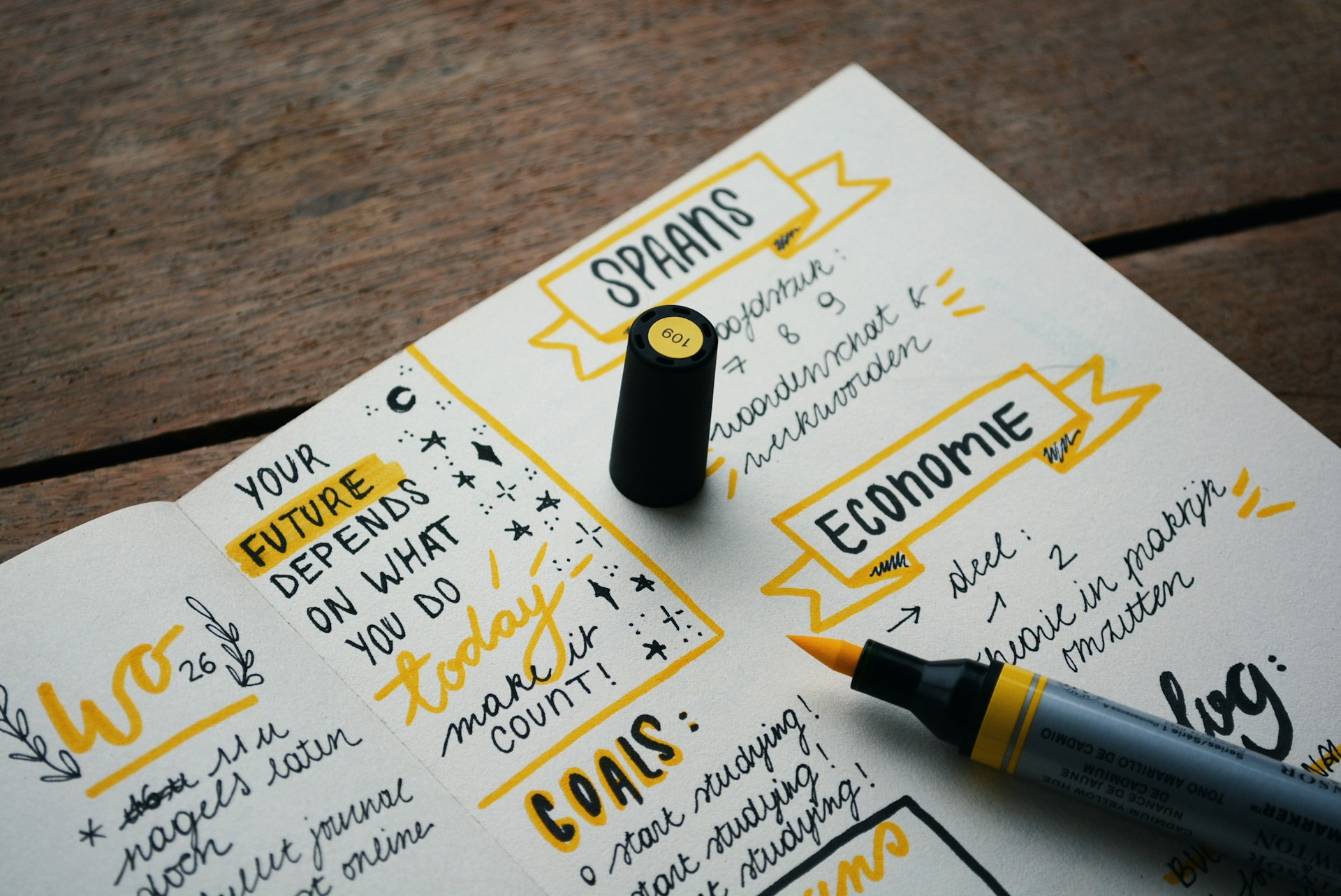
Photo by Estée Janssens on Unsplash
Comment on the podcast